Alternative Position, Navigation, and Timing for Mission-Critical Systems
Resilient Alt-PNT infrastructure that preserves navigation, synchronization, and system coherence when GPS and other references are degraded or unavailable.
Designed for Alternate Position, Navigation, and Timing (Alt-PNT), distributed sensing, and defense systems operating in contested environments.
Modern navigation and synchronization systems depend on precise time.
GPS provides that timing today, but when GPS signals are degraded or unavailable, the loss of accurate time quickly propagates through positioning, navigation, and distributed systems.
Resilient systems must maintain accurate time and temporal coherence even when reference signals are degraded, denied, or unavailable.
This challenge requires a resilient and secure timing layer that can preserve trusted time even when external references disappear.
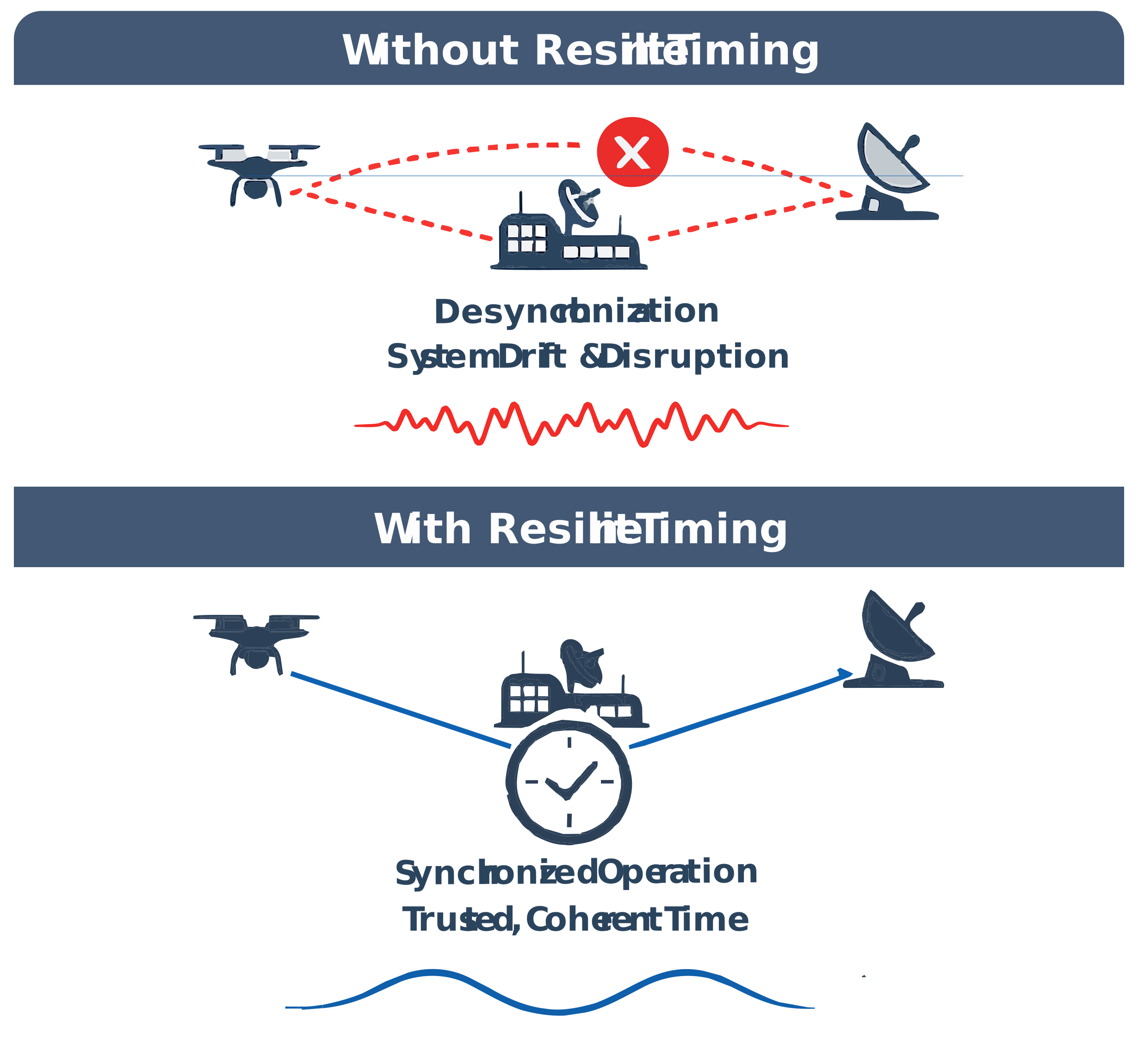
Resilient and secure infrastructure for navigation and mission systems.
Luminous Cyber provides resilient and secure infrastructure that preserves the precise timebase required for navigation, synchronization, and distributed mission systems.
At its core is the Temporal Resilience Engine™, which fuses a clock ensemble with sensors to preserve trusted time even when external references degrade.
The result is a hyper-accurate timing layer that preserves navigation, synchronization, and system coherence when external timing sources such as GPS are degraded or unavailable.
A layered architecture for resilient timing and navigation.
Luminous Cyber’s architecture is built as a timing resilience stack that preserves the accurate timebase required for navigation, synchronization, and distributed mission systems. The architecture scales outward from the Temporal Resilience Engine through hardware, network synchronization, and system integration layers to support resilient PNT capability when GPS and other references are degraded or unavailable.
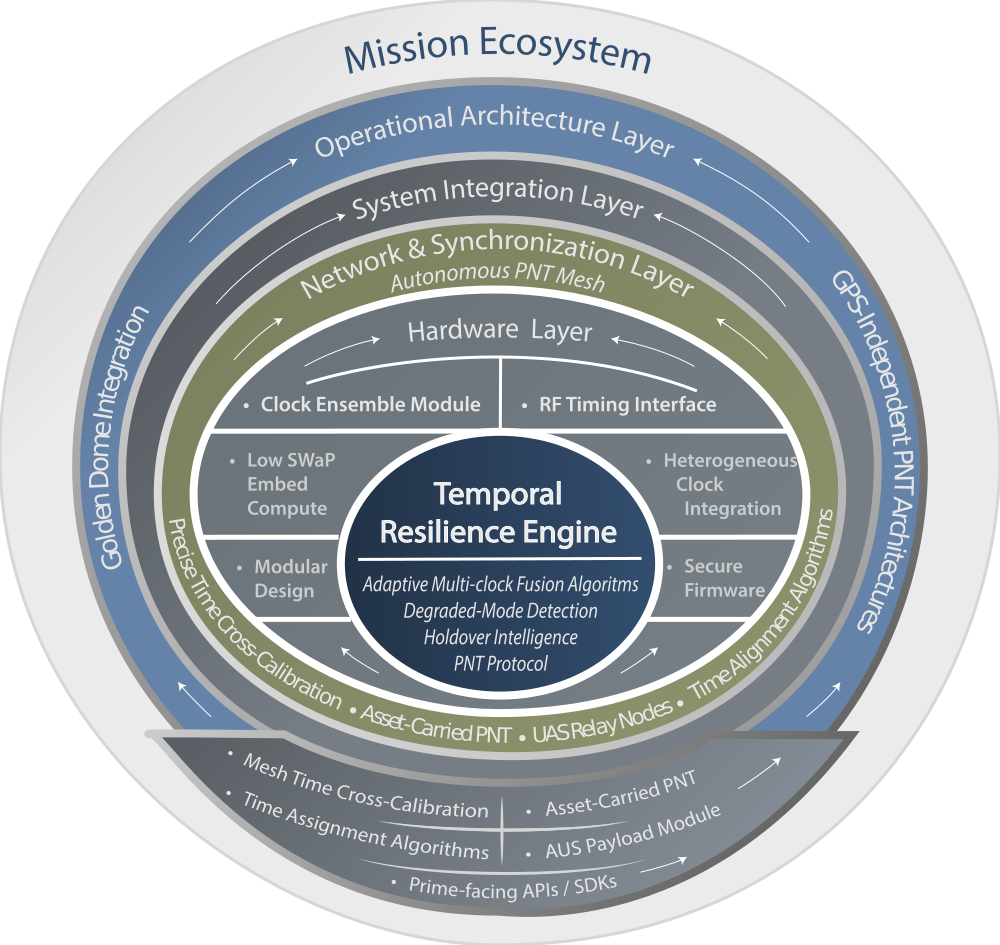
Complete Architecture
A top level view of the Luminous Cyber architecture, showing how resilient timing capability scales from the core engine outward into hardware, synchronization, and system integration to preserve navigation and distributed system coherence when external timing references are degraded or unavailable.
Built for mission systems that depend on resilient and secure timing and navigation.
Luminous Cyber supports systems that depend on precise time to maintain navigation, synchronization, and system coherence across contested and critical environments.
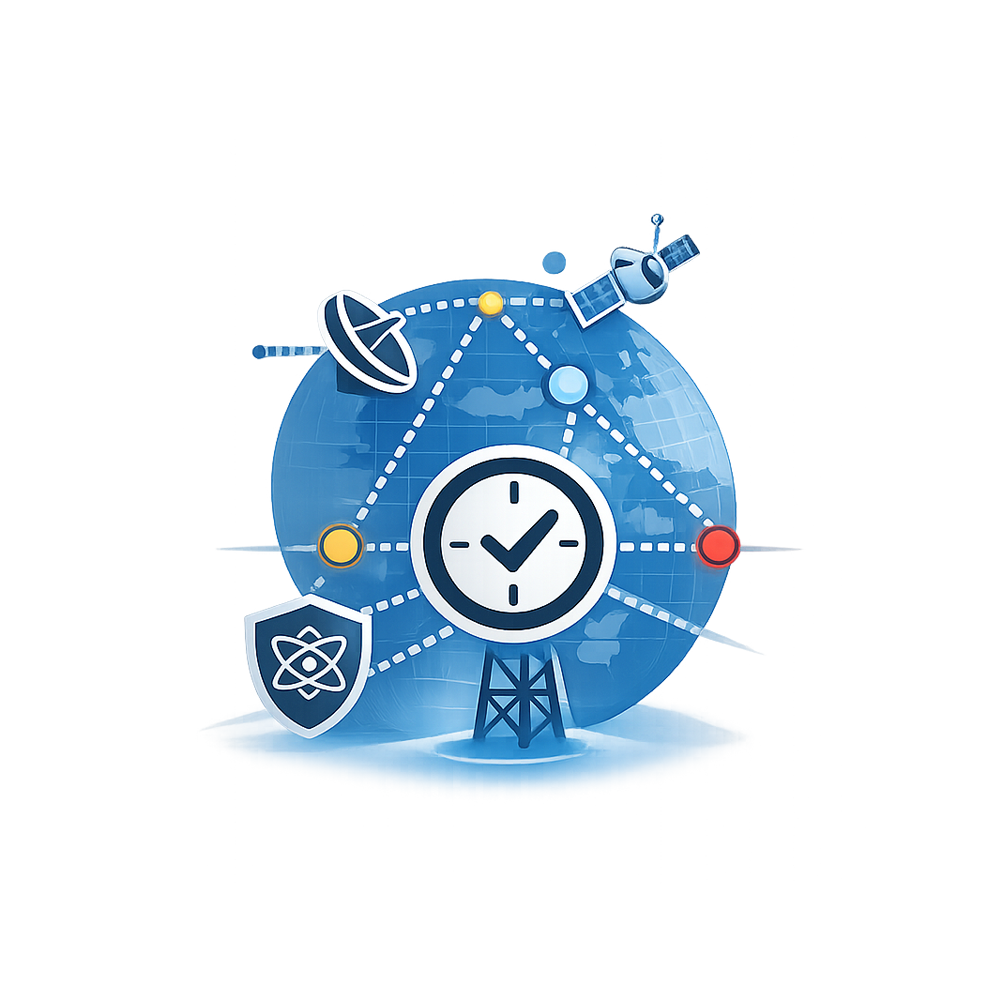
Layered Alt-PNT
Provides resilient and secure timing infrastructure that supports layered Alt-PNT architectures and preserves navigation capability when GPS signals are degraded or unavailable.

Air & Missile Defense
Supports synchronized radar, sensing, and interceptor operations when timing integrity matters most.

Distributed Sensing & Communications
Enables trusted, coherent timing across distributed sensors, nodes, and communication links.
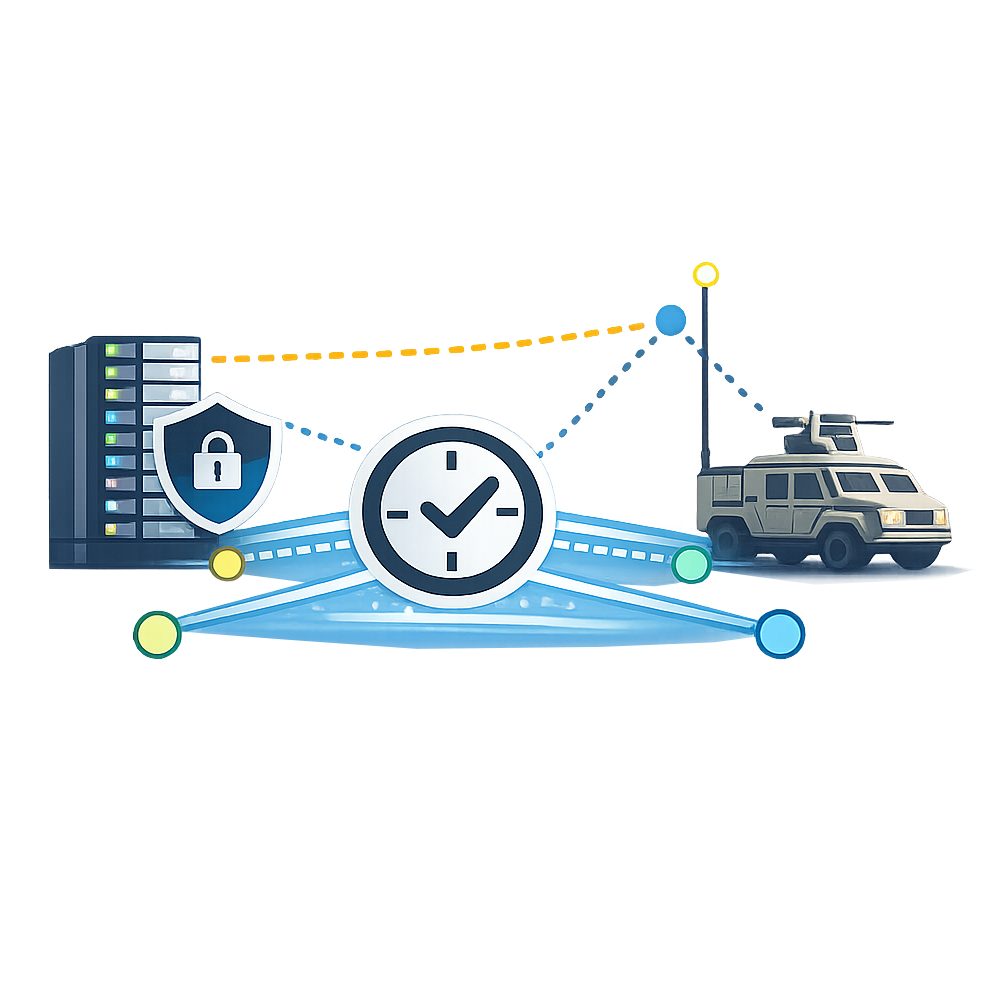
Flexible Platform Integration
Supports timing and synchronization subsystems that integrate cleanly at the board, enclosure, or platform level.
In these systems, resilient and secure timing preserves navigation and system coherence, turning time from a fragile dependency into a strategic capability.
Designed to integrate into existing platforms without a full system redesign.
Luminous Cyber is built for practical adoption across vehicles, fixed sites, and distributed mission systems.
- Available for board-level integration or enclosure-based deployment
- Designed to fit within existing navigation, synchronization, and mission-system architectures
- Supports heterogeneous clock technologies and modular ensemble configurations
- Supports standard timing interfaces, including 10 MHz, PPS, TOD
- Designed for MOSA environments, compatible with SOSA-aligned sensor>
- Enables phased adoption, from subsystem evaluation to platform-leve and compute architectures, and supports integration into CMOSS-style modular subsystem frameworks.
- Intended to reduce integration friction while preserving resilient timing and navigation performance
Evaluate our Alt-PNT approach for your navigation and mission systems.
Discuss how Luminous Cyber can integrate into platforms that depend on precise time to preserve navigation, synchronization, and system coherence when GPS and other references are degraded.